


Written by Tyler Anderson, Mathematician and Data Scientist at Nebbo.
Seasonal Forecast Models
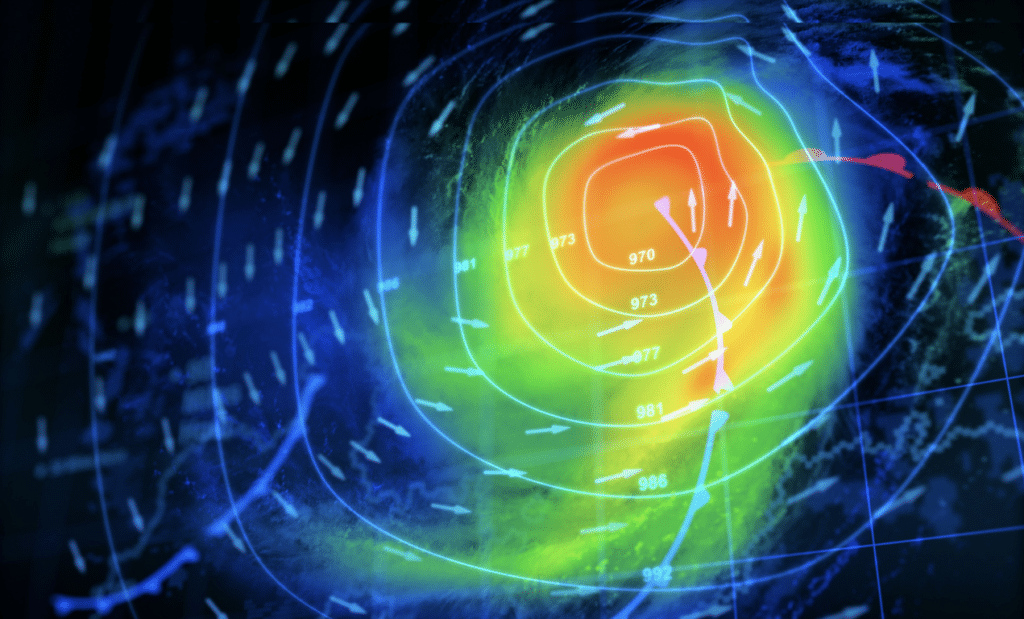
A Seasonal Forecast Model is a way of trying to predict the meteorological conditions of the earth on the seasonal level. By the seasonal level, predictions focus on what the meteorological conditions will be for a given month, not on what they will be at a specific date and time. This means that these models are not answering the question: What will the wind speed be at this time and date? Instead, they are answering the question: How does the wind speed this month compare with what is ‘normal’?
One may ask, “How are these types of long-term predictions even possible or feasible?”. Many factors contribute to this, but one significant reason is the presence of slow and predictable meteorological systems on Earth.
There are, of course, many different ways to model these seasonal conditions, which is why several meteorological centers have developed their own models to do so.
The basics of seasonal forecast models are outlined here. The next section introduces the most common models used in the seasonal forecasting community.
Common Models
Eight models are widely used in the seasonal forecasting community. These being:
- Centro Euro-Mediterraneo sui Cambiamenti Climatici (CMCC)
- Deutscher Wetterdienst (DWD)
- European Centre for Medium-Range Weather Forecasts (ECMWF)
- Environment and Climate Change Canada (ECCC)
- Japan Meteorological Agency (JMA)
- Météo France (Météo France)
- National Centers for Environmental Prediction (NCEP)
- UK Met Office (UKMO)
Each of these models tries to simulate the weather conditions in different ways, which causes them to have different predictions and errors. Not only this, but each model introduces some sort of bias into their predictions. This means that their predictions alone cannot be taken as an accurate prediction but must be compared against that model’s climatology predictions or their re-forecast predictions for a fixed set of months in the past.
Now that the most common models have been introduced, attention can turn to the data generated by these models.
Model Data
In this section, attention will be focused on the data that each of these models produces. Recall that these models are trying to predict what the meteorological conditions will be for a given month. Not surprisingly, this is an incredibly difficult task, and it is not feasible to try and account for all of the ways that these conditions are influenced by each other and the multitude of other things going on in the world at any given time. Therefore, they model the best that they can and add some “randomness” to account for things that cannot be modeled.
Instead of creating what are called deterministic predictions, which would be a definite value for the month being predicted, the models create probabilistic predictions. In this case, this means that the models will give a whole set of predictions for the month being predicted, which we call ensembles.
Each ensemble can be thought of as one possible outcome for the meteorological conditions on the month being predicted, and together the model gives us an idea of what the weather may be like for a particular month.
One important way that these ensembles produce slightly different outcomes for the weather is by being initialized with slightly different information. While this can be accomplished in many ways, one important method is by varying the time with which the ensembles are initialized.
If the initialization times of the ensembles are varied, then naturally they will have different starting weather conditions. Each model is free to choose how they do this, which leads to an interesting way in which the models generate their data differently.
Burst vs. Lagged Models
There are two main ways that seasonal models choose the initialization times of their ensemble members. These are:
- Burst Models or
- Lagged Models.
Burst models are models where all of their ensemble members are initialized at the same moment in time. This means that the difference between ensemble predictions must come from something else, like the initial conditions or some other randomness added during the modeling process.
Lagged models are models where their ensemble members are not necessarily initialized at the same time. This gives some extra variation in the ensembles as discussed above due to them not being initialized at the same time. Of course, the model may also add randomness elsewhere, but there is this additional difference between the ensembles too.
Summary
It is important to understand what a seasonal forecast model is and some of the differences between them to have the best idea of what the weather will look like in the coming months.
This article discussed what seasonal forecast models are and how they are used to predict meteorological conditions at the seasonal level. They produce probabilistic predictions as opposed to deterministic predictions, and one way that they model this randomness is by producing an ensemble of predictions. These ensembles can differ in many ways from each other, but one important way is by varying the initialization times of these ensemble members. This leads to two important classes of seasonal forecast models: burst and lagged.
